Free printable connect the dots
Connect the Dots is a counting-and-drawing puzzle: you join numbered dots in order until a picture appears. This page places twenty-eight dots inside a square frame; following 1 through 28 and back to 1 draws a closed triangle. Young counters, preschoolers practicing number order, and anyone who likes a simple reveal enjoy it.
Solution page included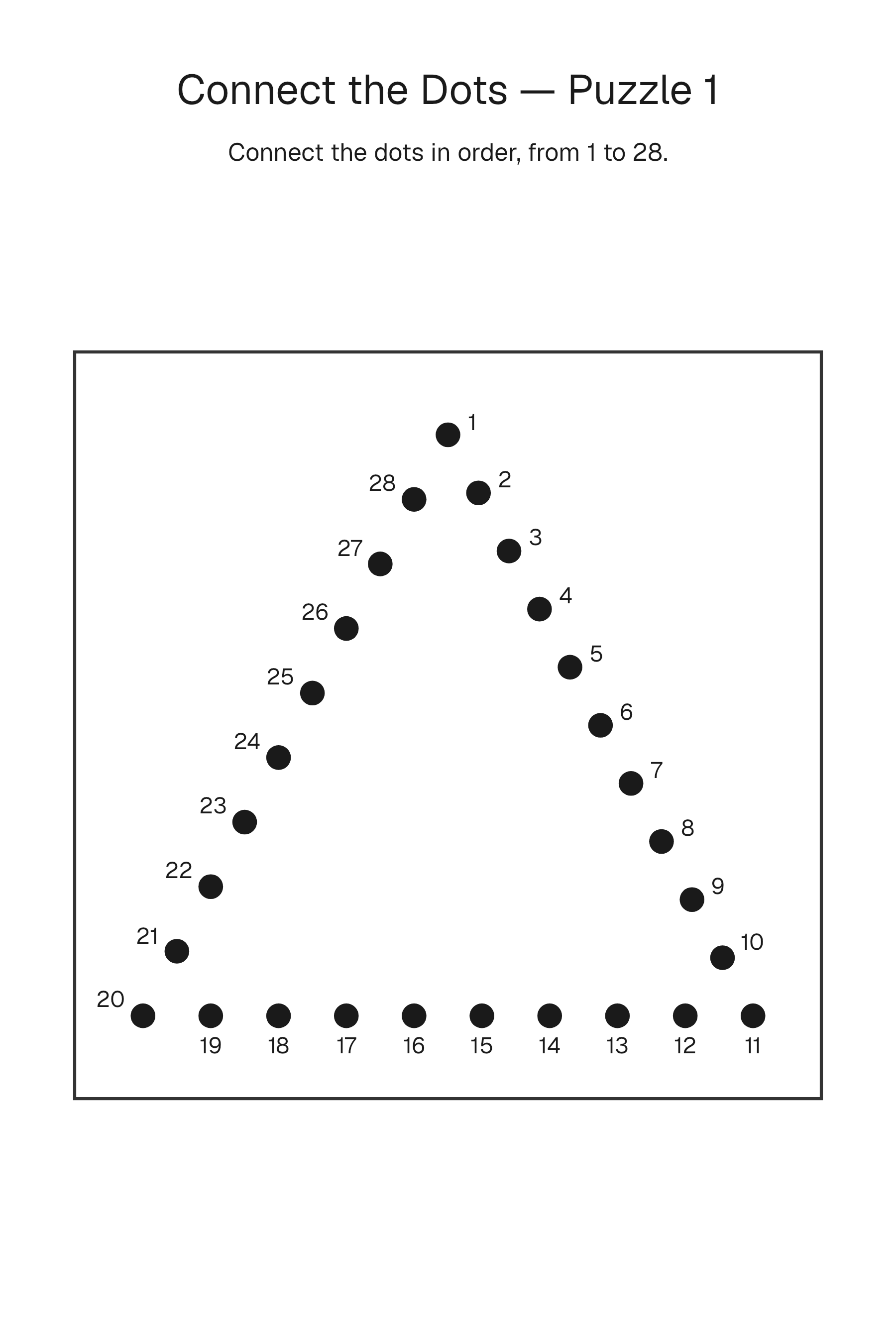
Peek at the solution
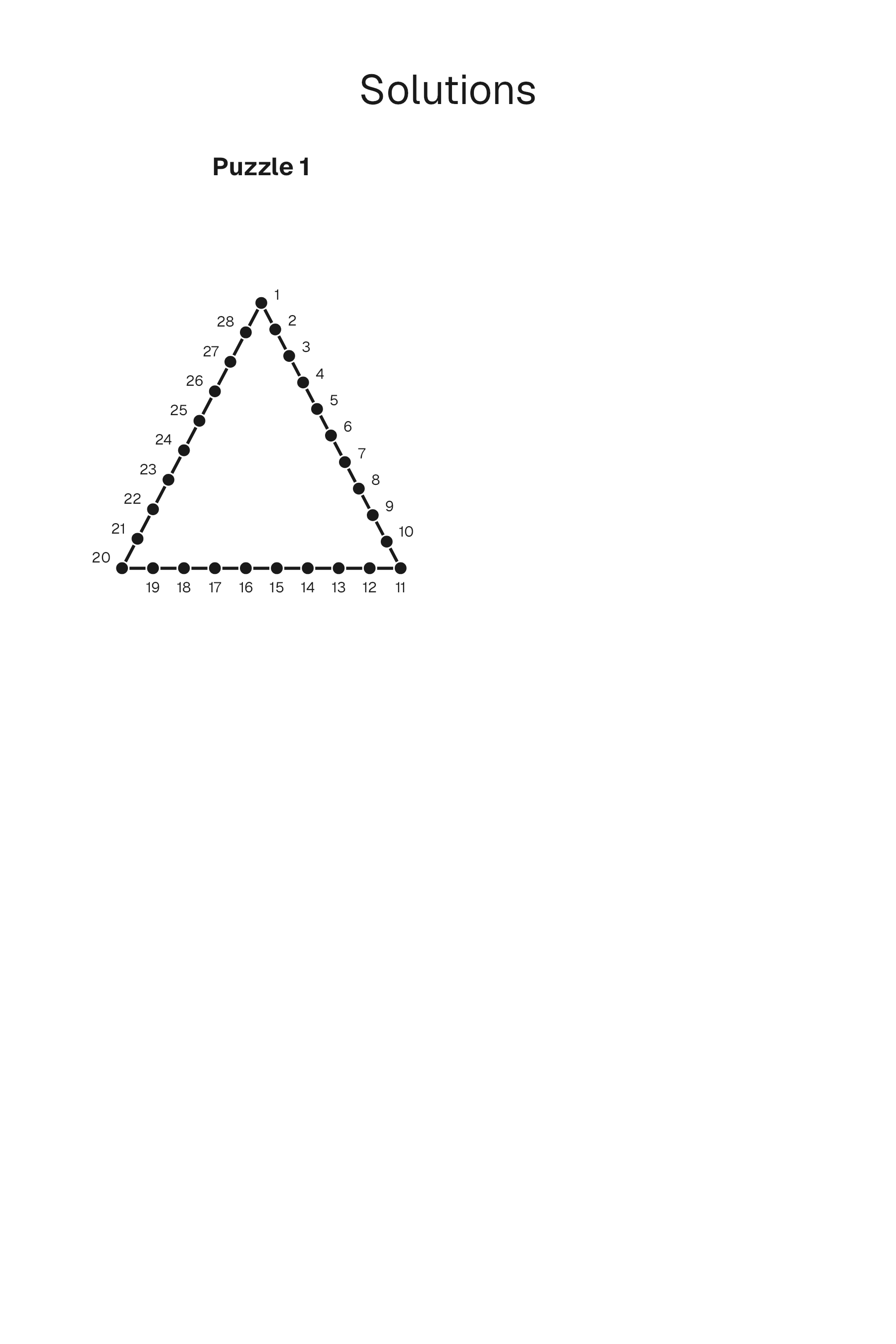
The download includes a high-resolution 6x9 inch PNG of the puzzle and a matching solution that shows the finished outline. Both files are free, with no signup required.
How to play
- Find dot number 1 near the top of the square frame.
- Draw a straight line from each numbered dot to the next, counting from 1 through 28.
- Connect 28 back to 1 to close the triangle.
- Compare your outline with the solution page if you want to check the finished shape.
Print at 100% scale on letter or A4 paper so the twenty-eight numbered dots stay spaced and easy to follow in order.
Frequently asked questions
Where is the connect-the-dots solution?
A second printable image on this page shows the completed triangle with every segment drawn. Download it with the puzzle if you want a check-your-work sheet, or keep it aside so the reveal stays a surprise. The solution is a PNG, just like the puzzle.
Is this connect-the-dots page free to print?
Yes. Both images download at no cost and without an account. Print them for home, preschool, or a quiet activity table. There is no PDF, no interactive version, and no email gate.
What age is this 1-to-28 triangle page for?
It works well for children who can count past twenty and hold a pencil for a continuous line. Twenty-eight dots is a longer path than a toddler sheet, so it also suits early elementary kids who want a calm counting drill. Adults helping younger solvers can point to the next number until the sequence feels automatic.
How should I print it so the numbers stay easy to follow?
Print the PNG at 100% scale on letter or A4 paper. Fit-to-page shrinking can crowd the labels around the dots and make 21 through 28 harder to read. A pencil or fine marker works better than a thick crayon because the dots sit close together along the base.
Get the KDP toolkit updates
New free tools and KDP rate-change alerts, occasionally, no spam.